
Compressed air generation is one of the significant electricity costs in many industrial facilities. For compressors operating 8,000 hours annually, even modest improvements in specific power can translate into substantial reductions in annual operating expenditure.
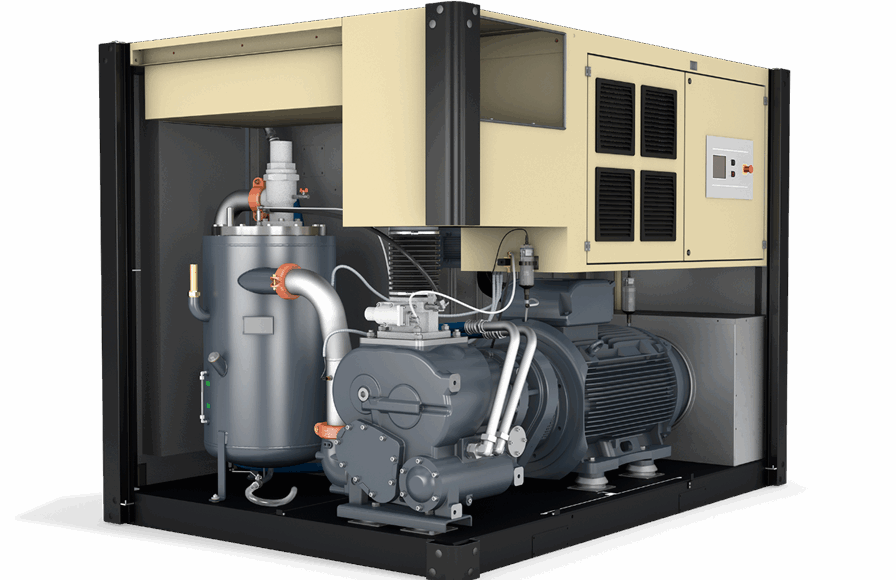
The Ingersoll Rand RTe110 -132ne variable-speed rotary screw compressors have been developed to improve the efficiency of compressed air generation through advanced two-stage compression, interstage cooling, an innovative GD10-DS airend and an IE4 efficiency-class motor.
The result is a compressor range designed to deliver more compressed air for each kilowatt of electrical energy consumed.
1. Why Two-Stage Compression Reduces Energy Consumption
Conventional single-stage rotary screw compressors raise the air pressure in one compression process. Although injected oil removes some of the heat generated, the compression process still requires more energy than the theoretical ideal of isothermal compression.
The RTe series divides compression into two stages, with cooling between the stages. This reduces the compression work required to reach the final discharge pressure.
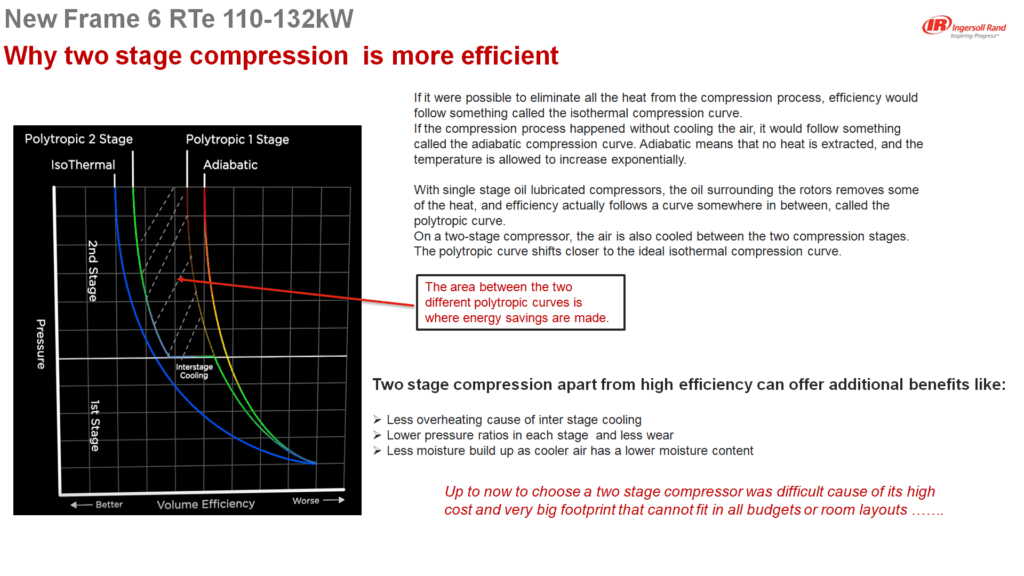
Figure 1: Theoretical compression curves illustrating the reduced compression work achievable through two-stage compression and interstage cooling.
What the chart demonstrates:
- Lower compression work: Interstage cooling moves the compression process closer to the ideal isothermal curve.
- Reduced operating temperatures: Cooling between stages helps limit temperature increases within the airend.
- Lower pressure ratio per stage: The total pressure increase is divided between two compression elements.
- Reduced electricity consumption: Less compression work means less electrical energy is required to generate a given volume of compressed air.
The efficiency improvement becomes particularly valuable on installations operating continuously or for extended production hours. A reduction of just 10 kW in average electrical demand saves €16,000.00 annually at 8,000 operating hours and €0.20/kWh.
Continue reading this technical article by clicking here


